
Are step drill bits better than spade bits? This is a question that often comes up among DIY enthusiasts, professional contractors, and those in the industrial manufacturing sector. As a step drill bit supplier, I've had the opportunity to see firsthand the advantages and limitations of both types of drill bits, and I'm here to provide a detailed comparison.
Understanding the Basics
Let's start by understanding what step drill bits and spade bits are. Step drill bits, also known as unibits, have a conical shape with multiple steps. Each step has a different diameter, allowing the bit to drill holes of various sizes in a single tool. For instance, a Nitrided Step Drill Bit from our product range is designed to provide high wear resistance and a longer service life, making it suitable for a wide range of materials.
On the other hand, spade bits are flat, paddle-shaped drill bits. They have a sharp point at the center and cutting edges on the sides. Spade bits are typically used for drilling large-diameter holes in wood quickly. They are relatively inexpensive and widely available in hardware stores.
Drilling Precision
One of the key advantages of step drill bits is their precision. The multiple steps on the bit allow for accurate hole sizing. You can start with a small hole and gradually increase the diameter to the desired size without having to change the drill bit. This is particularly useful when working on projects that require precise hole dimensions, such as electrical installations or plumbing work.
In contrast, spade bits are less precise. The flat design of the bit can cause it to wander or "walk" on the surface of the material, especially when starting the hole. This can result in holes that are slightly off-center or have an irregular shape. To mitigate this, you may need to use a center punch to mark the starting point of the hole, which adds an extra step to the drilling process.


Material Compatibility
Step drill bits are highly versatile when it comes to material compatibility. They can be used to drill holes in a variety of materials, including metal, plastic, wood, and even fiberglass. The sharp cutting edges and the conical shape of the bit allow it to penetrate different materials effectively. For example, our Quick-change Hexagonal Shank Step Drill Bit is designed for easy and quick bit changes, making it ideal for working with different materials on the same project.
Spade bits, on the other hand, are primarily designed for use in wood. While they can be used to drill holes in other materials, such as plastic or soft metals, they may not perform as well. The flat design of the bit can cause it to bind or overheat when drilling in harder materials, which can damage the bit and the workpiece.
Hole Quality
The quality of the holes produced by step drill bits is generally superior to that of spade bits. Step drill bits create clean, smooth holes with minimal burrs or rough edges. This is because the multiple steps on the bit gradually enlarge the hole, reducing the amount of stress on the material and preventing the formation of rough edges.
Spade bits, on the other hand, can produce holes with rough edges and burrs. The flat design of the bit can cause the material to tear or splinter as it is being drilled, resulting in a less-than-perfect hole. Additionally, spade bits may not be able to produce holes with a consistent diameter throughout the depth of the hole.
Cost and Efficiency
When it comes to cost, spade bits are generally less expensive than step drill bits. They are widely available and can be purchased in bulk at a relatively low cost. However, the lower cost of spade bits may be offset by their limited functionality and durability.
Step drill bits, while more expensive upfront, can provide better long-term value. Their versatility and precision mean that you may only need to purchase a few step drill bits to cover a wide range of hole sizes and materials. Additionally, step drill bits tend to have a longer service life than spade bits, which can result in cost savings over time.
In terms of efficiency, step drill bits can save you time and effort. Their ability to drill multiple hole sizes without changing bits can significantly reduce the time spent on a project. This is especially true for projects that require a large number of holes of different sizes.
Choosing the Right Bit for Your Project
So, are step drill bits better than spade bits? The answer depends on your specific needs and the nature of your project. If you need to drill precise holes in a variety of materials, then step drill bits are the way to go. Their versatility, precision, and hole quality make them a valuable tool for any DIY enthusiast or professional contractor.
On the other hand, if you are working primarily with wood and need to drill large-diameter holes quickly, then spade bits may be a more suitable option. Their low cost and fast drilling speed make them a popular choice for woodworking projects.
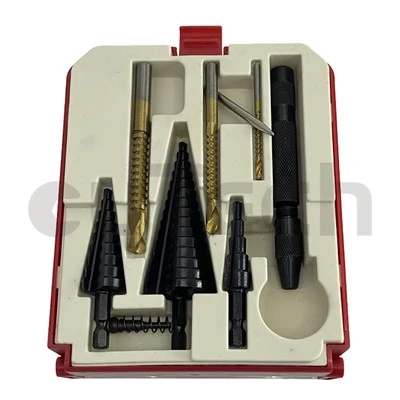
At our company, we offer a wide range of step drill bits, including the Step Drill Bit Kit, which contains multiple drill bits of different sizes and configurations. Our step drill bits are made from high-quality materials and are designed to provide superior performance and durability.
If you're interested in learning more about our step drill bits or would like to discuss your specific drilling needs, please don't hesitate to reach out. We're here to help you find the right solution for your project. Whether you're a professional contractor or a DIY enthusiast, we have the expertise and products to meet your requirements. Contact us today to start a conversation about your procurement needs.
References
- "Drill Bit Handbook" by Industrial Press Inc.
- "Woodworking Basics" by Popular Woodworking Magazine
- "Metalworking for Beginners" by Home Shop Machinist Magazine