The maintenance requirements for different diamond tools vary. Below are standard maintenance methods for common types to effectively extend tool life:
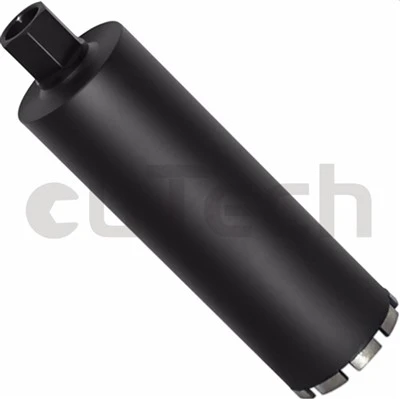
Drilling Tools (Diamond Anchor Drill Bits)
1. Daily Maintenance
Pre- and Post-Construction Cleaning and Inspection: After construction, use high-pressure air or clean water to clean the drill bit's water channels, matrix, and composite sheet gaps to remove rock powder and coal sludge, preventing blockages that could cause high-temperature burns to the composite sheet. Check the wear of the composite sheet; if it is less than 1 mm and there are no chipping or cracks, and the matrix connectors are intact, it can be reused. Excessive wear/cracks require replacement.
Regular Maintenance: Regularly apply anti-rust oil to the connecting threads to ensure assembly accuracy. Before construction, conduct a pre-inspection to confirm the drill bit is in good condition and the water channels are unobstructed.
2. Storage Specifications
Storage environment should be dry, well-ventilated, and free of corrosive gases, away from damp and waterlogged areas to prevent rust. Place in a dedicated storage box/shelf, and do not stack or mix with hard objects such as ironware to prevent damage from impacts. For long-term storage, apply rust-preventive oil to the threads, wrap the cutting end for protection, and store according to specifications.
Abrasives (Diamond Grinding Wheels)
1. Maintenance During Use
Use with coolant (kerosene recommended) to reduce grinding head wear and improve grinding efficiency and quality. When the grinding wheel becomes dull or clogged, gently dress the working surface with a silicon carbide abrasive strip. When using a new grinding wheel for the first time, dress it to the correct shape using a WA180L5V oilstone.
For machining high-hardness materials only; do not grind ordinary soft steel to avoid rapid wear. Static balancing is required after installation. Do not arbitrarily disassemble from the flange during use to extend service life.
2. Storage Requirements
The environment must be dry, and the temperature should not be lower than 5℃ to avoid moisture/low temperature affecting strength. Different binders have different incompatibilities: rubber binders should not come into contact with oils, and resin binders should not come into contact with alkalis to avoid reducing grinding strength.
Store separately according to specifications to avoid misuse: large-diameter grinding wheels should be stored upright; the stacking height of thin/small grinding wheels should not exceed 600mm; the stacking height of rubber/resin sheet grinding wheels should not exceed 200mm; the storage period for resin and rubber bonded grinding wheels should not exceed 1 year. Wheels exceeding this period must pass inspection before use.